Cells of multicellular organisms
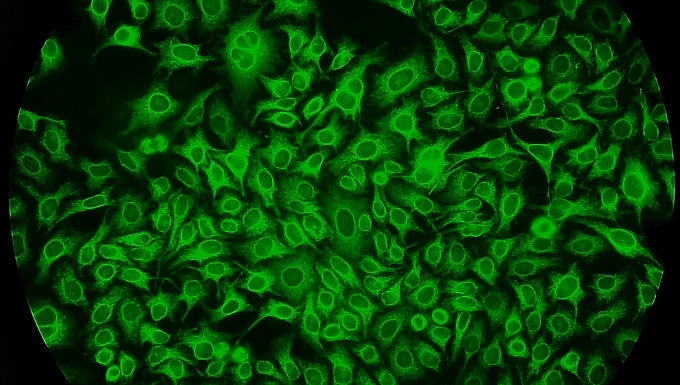
My introduction to the cells of multicellular organisms, like many other peoples’, came in the form of two convoluted 2D drawings – the animal cell and the plant cell. The animal cell is some variation on a circle while the plant cell is some variation of a rectangle. Both are packed with smaller, even more esoteric shapes – organelles, which every high school student at some point of their life had to label the names and functions during biology class.
Given how complicated these names are and the nonexistent relation with shapes and function, the only thing most people remember from these assignment exercises is that ‘the mitochondria is the powerhouse of the cell’. Even to the most enthusiastic biology student who is willing to commit the shapes, names and functions of organelles to heart, the biggest take-home message is probably ‘some organelles are shared (cell membranes, nuclei, ribosomes) while others are different (mitochondria, chloroplasts, cell wall)’. It is a shame that most people stop with those two 2D drawings as there is a huge diversity of cell shapes, even within the same individual organism.
Cell shapes
Some muscle cells look like long wires on a suspension bridge. Some blood cells look like disks and planets. Some neurons look like trees with a large beehive somewhere along its branches. Gut cells can look like patches of grass and soil. Sperm cells look like little tadpoles. The same applies to the diversity of plant cells. Leaf cells are cuboid. Xylem and phloem cells are long tubular structures. Root cells are rounded.
Cell functions
Those 2D drawings do not capture the function of the whole cell either. Different cells can have different numbers of organelles. Muscles have more cytoskeletal elements than most cells which allows them to contract and expand. Sperms are packed with mitochondria to enable them to swim. Red blood cells have no nuclei at all. Furthermore, they exclude molecules which can be as important as the organelles to the cell’s function. These are often called cell markers because of their tight association with the specific cell type. Haemoglobin in red blood cells enable them to store and deliver oxygen to all the cells in the body. Sperms have tails which help them swim towards the egg. Neurons have different sensory receptors, some receptor types detect stimuli from the environment like smells and tastes while other receptor types respond to chemical signals (i.e, neurotransmitters) from other neurons.
Cell dynamism – states and fates
Most important, the 2D drawings cannot depict the dynamism of cells. The static images of organelles obscure the activity of individual molecules within them. Additionally, the same cell can react in many ways to different environmental stimuli (i.e, exist in different states), and communicate said states to other cells, which may also change their state in response. Many types of state changes could happen, depending on the properties of the stimulus and the cell that perceives the stimulus. For example, if genes involved in a particular state tend to be more/less available for transcription than when the cell is in another state, it follows that different amounts of transcripts or protein can be associated with each state. Some state changes are temporary, in the sense that the cell may flip between different states and still be considered the same cell. A neuron which is at rest is still the same neuron when it fires.
However, there are other changes that result in transformation of the identity (i.e. fate) of a cell. Indeed, every cell in a multicellular organism carries genetic instructions which may enable them to divide, differentiate into a different cell, or die. Yet, not all cells will undergo all three processes during their lifetimes. Most cells I’ve described thus far are terminally differentiated, i.e. have 1) have largely fixed shapes and function, and 2) do not divide further. There also exists stem cells, cells that have the capacity to divide into said more differentiated cells and/or more copies of themselves; all cells in the body of a multicellular organism at any given moment is derived from the division and differentiation of ‘parent’ stem cells whose own lineage of parent stem cells can be traced back to a single stem cell, the zygote. After each stage of so-called asymmetric division, stemness is often lost during normal development. Lastly, some cells in multicellular organisms die via genetically-encoded processes that are triggered either in response to noxious insults or by natural development. While these constitute ‘terminal’ cells in the literal sense, both terminally-differentiated cells and stem cells can die.
Cell types and their development and evolution
Throughout most of the 20th century, the types of cells within multicellular organisms were primarily defined by their shapes and functions. As such, only the most conspicuous and functionally important cells were studied; their lineages often vaguely known. In addition, model cells and organisms were employed to study fundamental cell development. The development of individual human blood cell lineages have been known for a long time through cytological studies. Meanwhile, the works of Sydney Brenner in the 1970s leveraged the semi-transparency and small cell number of the roundworm Caenorhabditis elegans to identify every single cell lineage in a single organism.
However, for many other organisms and cell types, individual cell development cannot be observed by eye. Thus, molecular markers are still the most popular tools. While molecular markers for many different cell types have been identified by the mid-20th century, the genetic engineering revolution in the 1980s and 90s allowed for the accelerated discovery of cell-type specific markers. Specifically, the discovery of marker genes whose expression is correlated with specific stages of cell development were used to identify cells. Antibodies are used to find marker proteins, while in-situ hybridization probes are used to find marker transcripts. Oftentimes, these genes code for peripheral molecules (e.g. cell surface receptors) that are expressed by cells that are terminally differentiated or significantly reduced in stemness. As such, the stem cell populations for these are harder to trace.
Another class of marker genes have come to be more strongly associated with both terminally-differentiated cells AND the stem cells which precede them – transcription factor genes. Not only do certain transcription factors genes label specific cells, but they can be also required for cell types to develop in the first place, presumably acting as ‘decision points’ for the expression of cell-specific molecules and repression of stemness. Indeed, mutants for certain combinations of transcription factors do not develop certain cell types. Furthermore, some transcription factors can even revert terminally differentiated cells into stem cells, e.g. the four Yamanaka factors which can transform more differentiated cells into induced pluripotent stem cells. As such, there is an increasingly accepted view that a ‘cell type’ is no longer defined just by shape, morphology, or molecular markers associated with terminally differentiated cells. Instead, cell type can be defined by a specific group of interacting transcription factors that uniquely specify their generation and maintenance (e.g., core regulatory complexes by Detlef Arendt).
Following the advance of sequencing technologies in the 2010s, single-cell transcriptomics techniques are currently the latest technique for identification of cell types. While datasets contain vast amounts of uninformative data (noise), considering that the entire cell’s transcript content is being measured and many cells do not express particular genes, the technique often confirms molecular marker studies and more importantly, captures interactions via transcriptional profiles. Many scientists adapt a comparative evolutionary approach to study and define cell type identity, since transcript levels correlate well with phenotypic changes and genotypic changes, and gene evolutionary histories (i.e, orthology) can now be better defined. However, there are likely more molecular changes, e.g. epigenetic and post-transcriptional changes, associated with particular cell types that remain underexplored. As such, the definition of a cell type is still evolving.
We have gone a very long way from the animal and plant cell in the high school textbooks, haven't we?
(Originally written in 2021)